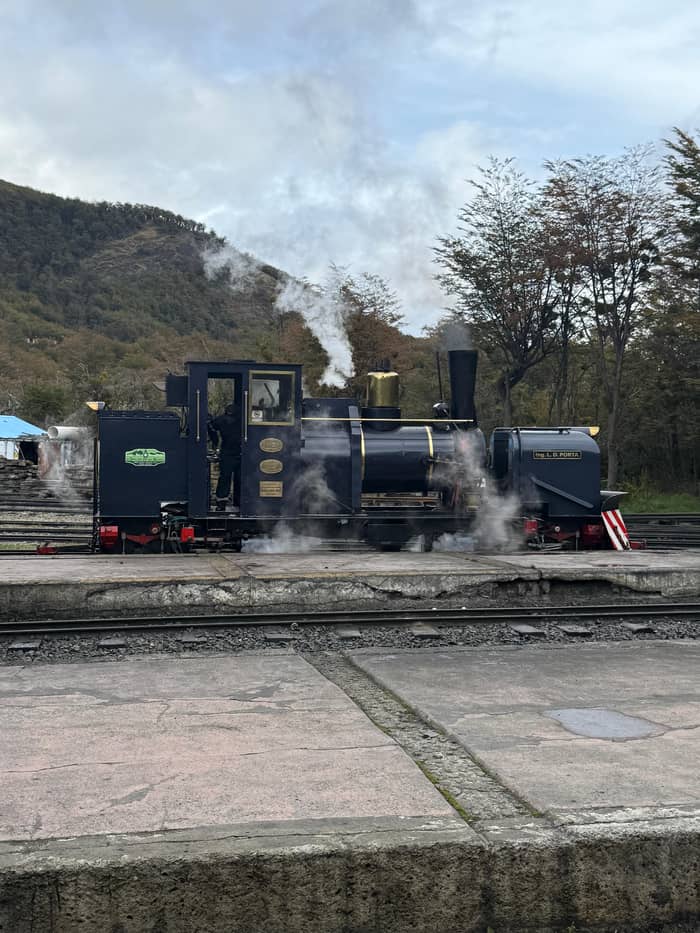
Boarding point
End of the World
Main station
- From town8 km
- Arrive45 minutes early
- InsideWorkshops and café
Explore the stops
The short version
The End of the World Train runs from its main station west of Ushuaia up the Pipo valley, stops at the La Macarena waterfall, and ends at a station inside Tierra del Fuego National Park.
Route facts
Discover 20 stops
Select a route, then press a pin or stop to read its note and open Google Maps.
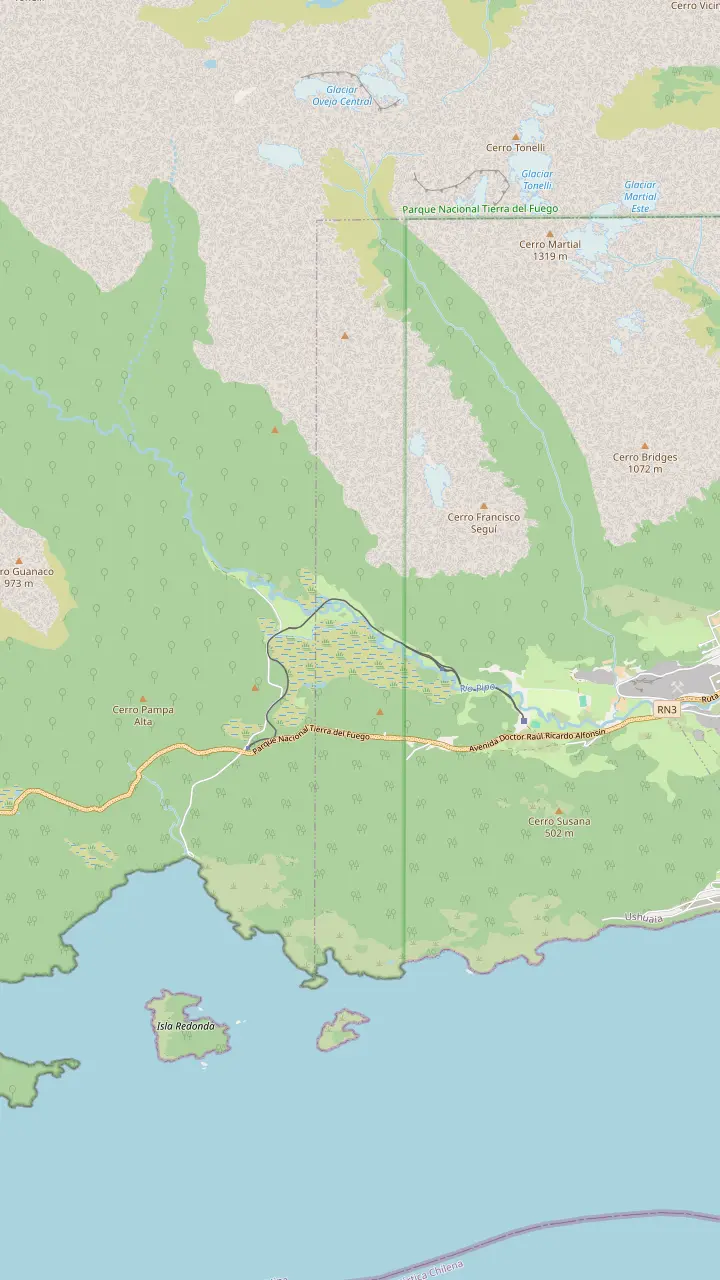
Main station on Route 3 at km 3065, about 8 km from the centre; the only place to board.
Google MapsThe halfway stop: about 20 minutes off the train, with a gazebo over the Pipo valley.
Google MapsThe waterfall where the prisoners' locomotive once took on water.
Google MapsFree camping area in the Pipo valley and start of the waterfall trail; the tracks run close by.
Google MapsWaterfall trail of 30 minutes and 931 m, open November to April.
Google MapsEnd of the line inside the national park; the train waits 10 to 15 minutes before heading back.
Google Maps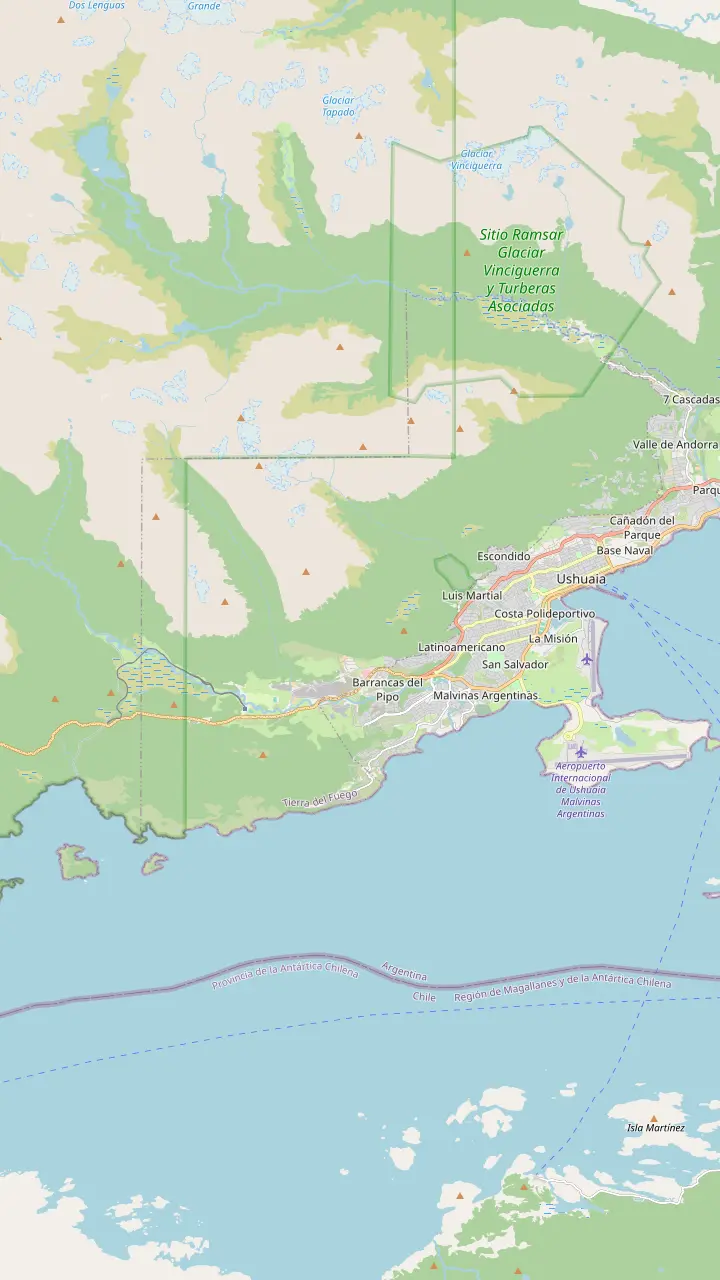
The convict-built prison, now the Maritime and Prison Museum; open 10:00 to 20:00.
Google MapsCapital of Tierra del Fuego province, at the southern tip of Patagonia.
Google MapsMain station on Route 3 at km 3065, about 8 km from the centre; the only place to board.
Google MapsThe halfway stop: about 20 minutes off the train, with a gazebo over the Pipo valley.
Google MapsEnd of the line inside the national park; the train waits 10 to 15 minutes before heading back.
Google MapsFree camping area in the Pipo valley and start of the waterfall trail; the tracks run close by.
Google Maps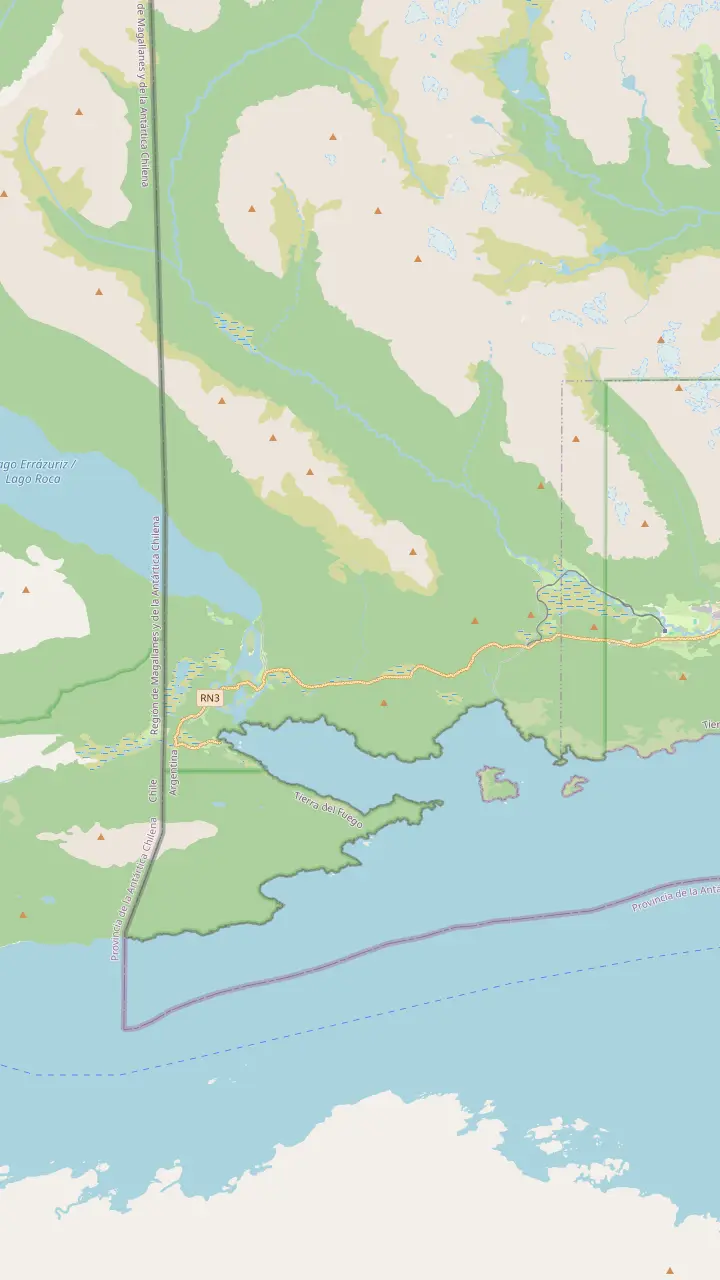
End of the line inside the national park; the train waits 10 to 15 minutes before heading back.
Google MapsCoastal site facing Isla Redonda and start of the Coastal Path.
Google MapsVisitor centre whose restaurant and café open from 10 to 17:30.
Google MapsLake Acigami, also called Roca, a binational lake crossed by the Chilean border.
Google MapsWhere National Route 3 ends; the sign gives 3,063 kilometres to Buenos Aires.
Google MapsLaguna Verde, on Isla Entre Ríos, is one of the park's basic campsites, without services.
Google MapsShort path to an old beaver dam: 20 minutes, 200 m, open all year.
Google MapsHigh-difficulty climb: 7:30 hours and 5 km return, open November to April.
Google MapsWaterfall trail of 30 minutes and 931 m, open November to April.
Google Maps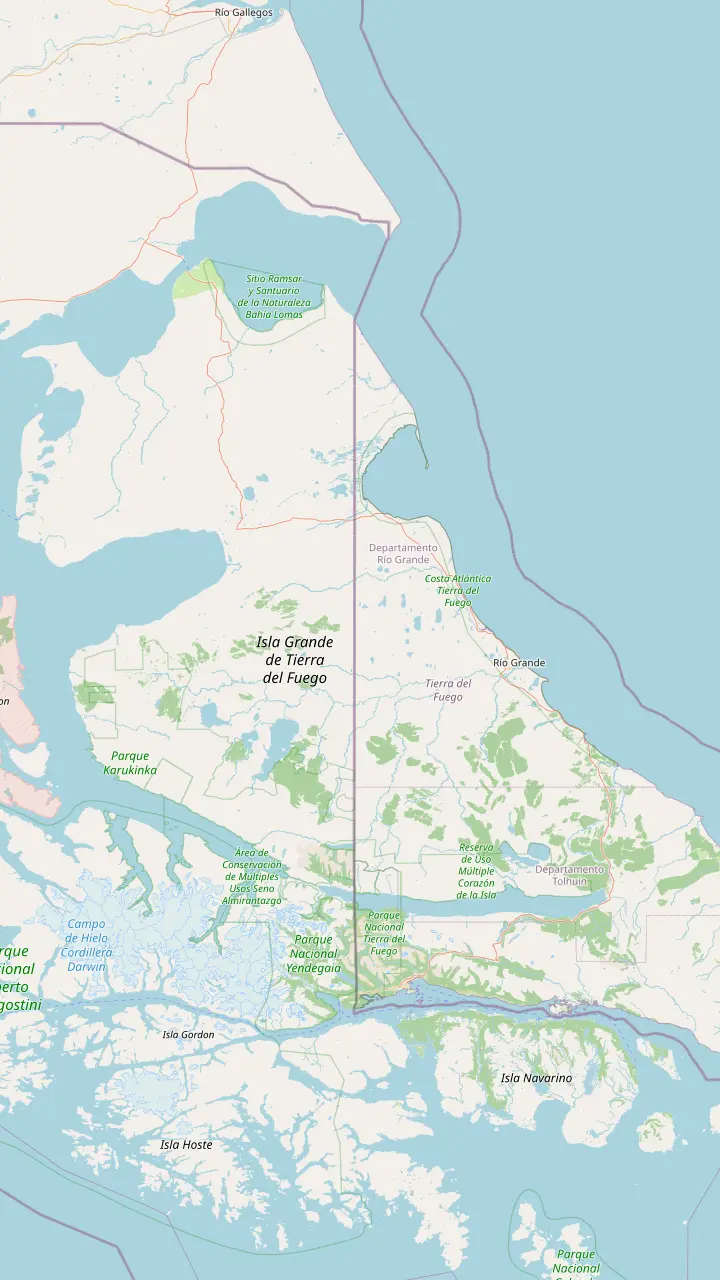
Capital of Tierra del Fuego province, at the southern tip of Patagonia.
Google MapsAirport 5 km from town; no public transport into the centre.
Google MapsWhere National Route 3 ends; the sign gives 3,063 kilometres to Buenos Aires.
Google MapsChilean town on Navarino Island that Chile's tourism board calls the southernmost city.
Google MapsA binational lake, like Acigami, crossed by the Chilean border.
Google MapsThe island's northern city; its airport lies about 5 km north-west of the centre.
Google MapsThe ferry crosses the Strait of Magellan, Chilean water, on the road to the island.
Google Maps© OpenStreetMap contributors · map data
The End of the World Train route runs 7 km from a station on Route 3, past a waterfall stop in the Pipo valley, to a platform inside Tierra del Fuego National Park.
Editorial team, endoftheworldtrain.com · Updated November 11, 2026 · Takes 8 min
The End of the World Train route starts well outside town. The operator places its main station on National Route 3 at km 3065, about 8 km from central Ushuaia.2 Its FAQ adds that the station sits outside the protected area, 1 km before the entrance to Tierra del Fuego National Park, although the ride itself does enter the park.6 So the first thing to plan is the drive or transfer out along the coast road heading west.
That station is the only place to board. The operator is clear that boarding happens at the main station alone, never at the park station.5 Passengers have to present themselves 45 minutes before departure for a compulsory check-in, which is why tour vans arrive early and leave time for the waiting room.7 If you are traveling on your own, add that margin to the drive from town and you will not be rushed on the platform.
The waiting time is part of the visit. The city tourism office describes the End of the World Station as a place to see the maintenance workshops and old photographs, browse the gift shop or have a drink at the café before your train.8 Do your errands first: the station has no ATM and the carriages have no toilets, so use the station facilities before you climb in.9,10 Bring pesos or a card from town for the café and the shop.
Station guide
| Station | Where | Stop | What to do |
|---|---|---|---|
| End of the World | Route 3, km 3065 | Start | Workshops, old photos, café |
| La Macarena | Pipo valley | About 20 minutes | Waterfall, gazebo, locomotive photos |
| National Park | Inside the park | 10 to 15 minutes | Toilets, trails, tour pickups |
From the operator's route page and FAQ and the city tourism office.2,8,3,19,20,21
Leaving the platform, the narrow-gauge train heads up the valley of the Pipo river. The city's tourism office lists what you pass: lenga and ñire beech forest, peatlands, the Pipo itself and the Burnt Bridge, where a pause gives the first wide view of the valley.11 The forest here is the same subantarctic woodland that covers the park, with tall lenga on the drier ground and stunted ñire on the edges of the bogs.
This first stretch follows ground the convicts worked a century ago. The Maritime Museum records that from 1908 the prisoners' railway spread into the Pipo valley and on to the Cañadón del Toro, which is now inside the park.15 The operator calls today's ride a recreation of the last kilometres of that old line.16 Keep an eye on the slopes as you roll: this was timber country long before it was scenery.
The national park's printed leaflet says the train enters the protected area about halfway along its roughly 7 km circuit.12 There is no grand gate on the line, so the moment is easy to miss. The change is legal rather than visual: from here on, park rules apply, which is why the operator reminds every passenger that the park entry fee is compulsory for the ride and not included in the train ticket.17
The one intermediate stop is La Macarena. The operator says the train halts there for about 20 minutes, long enough to take photos beside the locomotive, walk to the Macarena waterfall and take in the view toward Cerro Guanaco, Monte Susana and the river below.3,24,25 Everybody climbs back aboard at the end of the stop and the train carries on toward the park. Have your camera ready before the doors open.
The stop has a history of its own. The operator's FAQ explains that the waterfall is where the prisoners' locomotive used to take on water.26 Recent works at La Macarena built a viewpoint with a gazebo looking over the Pipo valley, plus a locomotive with hoppers and a flag mast as a small open-air walk through railway history.19,27 It is the best place on the route to see the scale of the valley you are crossing.
La Macarena also became easier for everyone. The operator opened a section called Paseo del Valle there as an accessible option for passengers with reduced mobility.28 Adapted coaches are available on the train itself when you say so at booking.29 If you travel with someone who uses a wheelchair, mention it when you book and ask staff on the day which part of the stop suits them best.
Pick your way
Choose by how much of the park you want after the train.
If I only want the train
Round trip from the main station
Every stop is included and you finish where you started.1
If I want time on the trails after the ride
One way, then the 16:00 train
Possible in spring and summer if seats are free.22
If I want the bays and lakes too
A guided park and train tour
The most reviewed tour rides the train, then visits Ensenada, Lapataia and Lago Roca.
If I am visiting in winter
Stay aboard for the round trip
Spots around the last stop shut when the weather turns.23
The stations
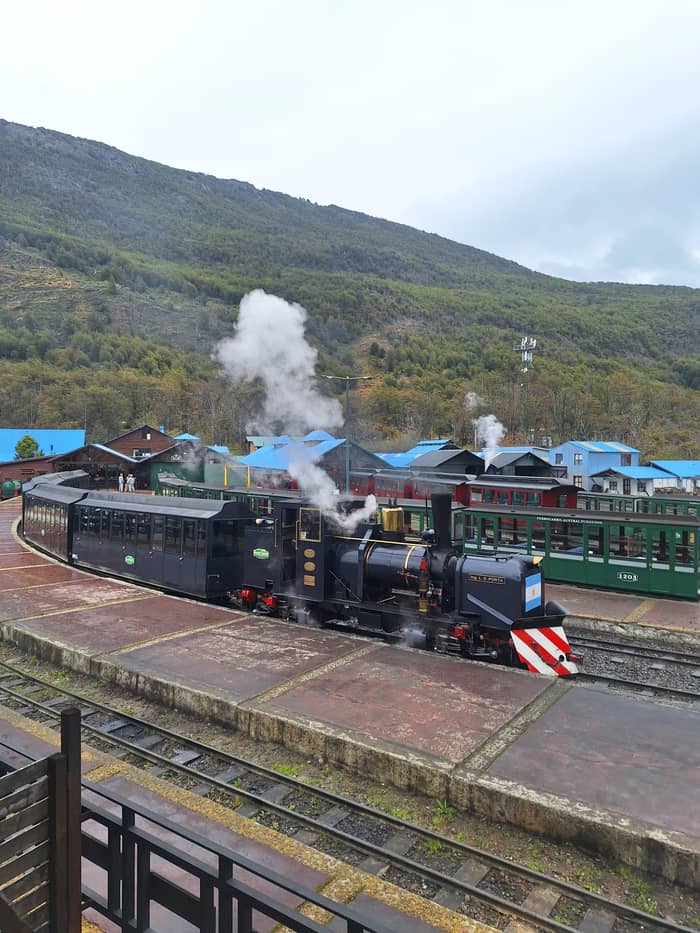
Boarding point
Main station
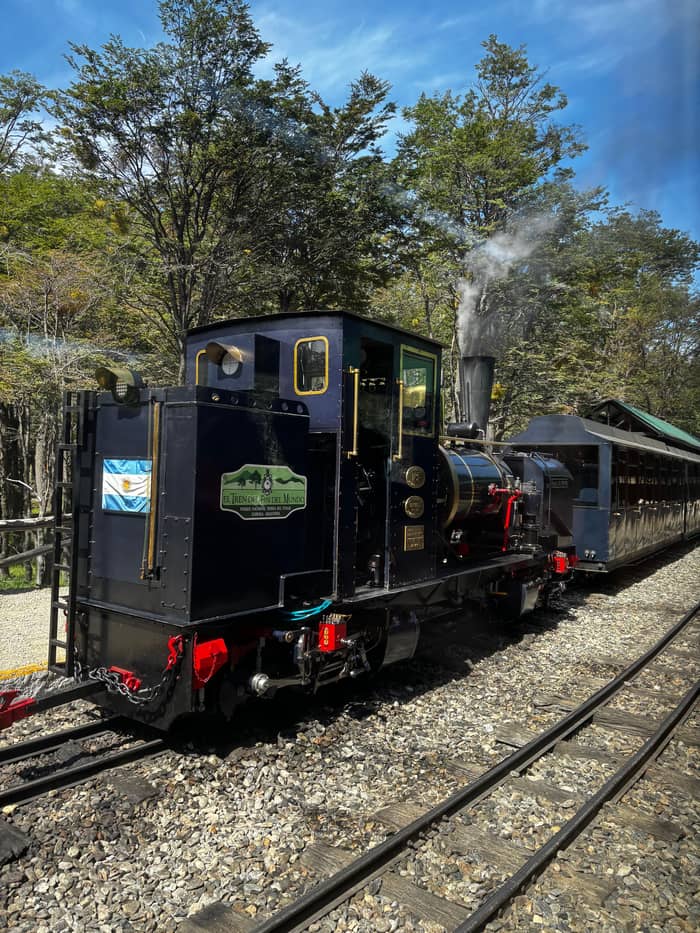
Waterfall
Intermediate stop
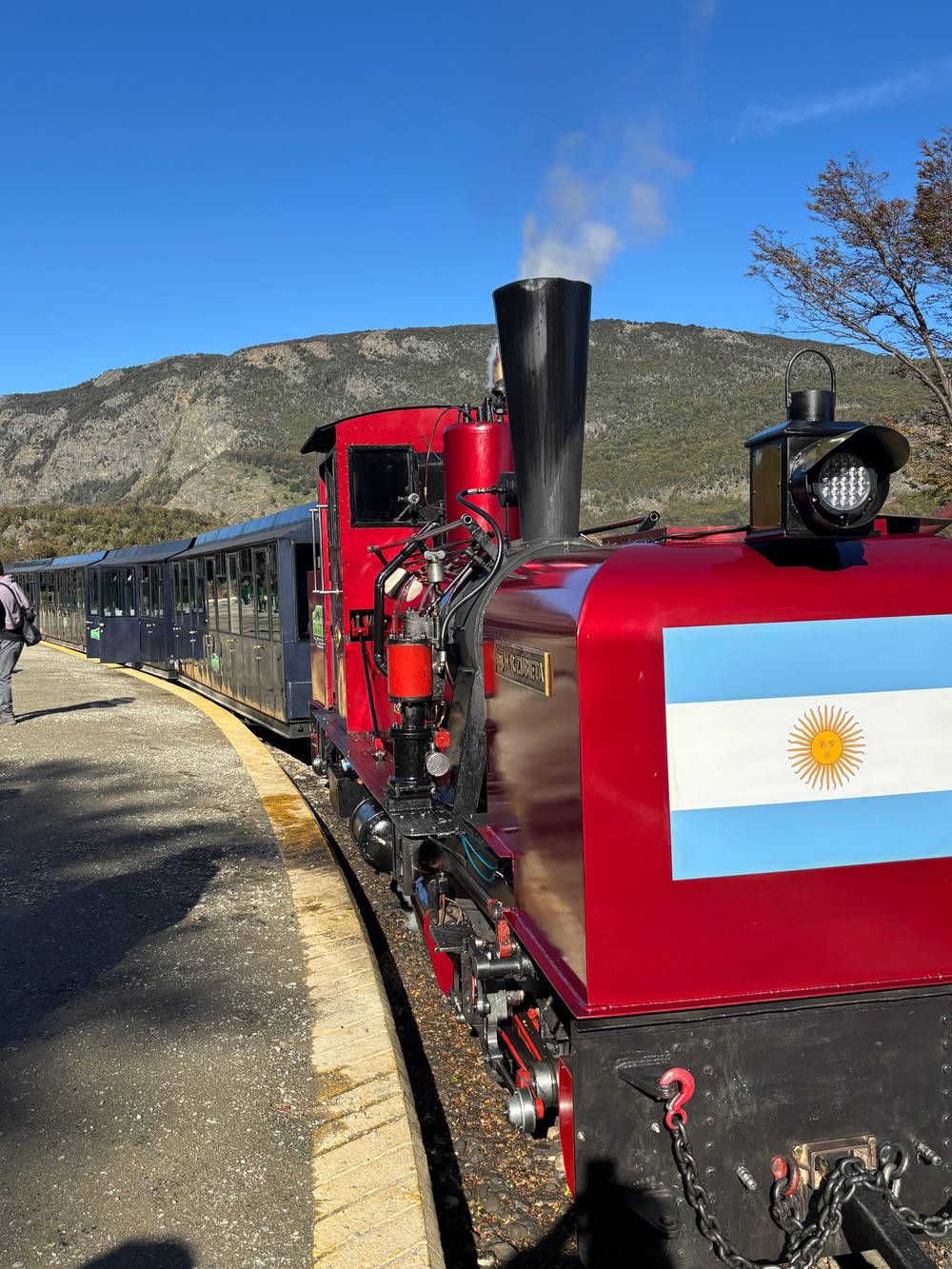
Inside the park
Final station
After La Macarena the line runs deeper into the Pipo valley and inside the national park. The park service describes the Río Pipo valley as a free camping area and the start of the gentle waterfall trail, and notes that along that path you can see the train's tracks and, with luck, the train passing.30 For walkers it is a good way to watch the steam from outside rather than from the carriage window.
The waterfall trail from the Pipo campsite is short: 30 minutes and 931 m, open from November to April.31 The valley also has one practical quirk. The park leaflet says there is no mobile signal or internet in the park, except around the Cañadón del Toro and the Pipo valley.52 That puts the far end of the line among the rare corners of the park where a phone may pick up a signal, handy if you need to call your driver.
This is where the line meets the park roads. Regular shuttles from the city centre make 7 stops inside the park, and one of them is the railway station.53 The park service also says the terminal station is the entry point for travelers on park excursions booked with a travel company.54 In other words, tour vans and shuttles wait near the park platform, ready to carry you on to the lakes and bays.
Stop by stop
Check-in
Arrive 45 minutes before departure.7
First stretch
Lenga, ñire, peatland and the Pipo River.11
La Macarena
About 20 minutes off the train.3
Halfway
The line enters the protected area.12
Park station
10 to 15 minutes while the engine is coupled.13
Return
Or stay in the park on a one-way ticket.14
The line runs out at National Park station, well within the protected area.4 On a round trip the train stops there for 10 to 15 minutes while the crew couples the locomotive for the run back to the main station.13 The platform has public toilets.21 It is a short stop, so step down, stretch and take your photos close to the train, then listen for the whistle and the crew calling passengers back aboard.
The station itself is new. The operator announced that building work on the National Park station got under way in 2023.55 The plan promised safe, roofed spaces and a new toilet block, a real comfort in a place where wind, rain and snow can arrive in the same afternoon, and where a tour group may wait a while for its van.56 Its photographs show the locomotives Camila and Zubieta standing at this platform.57,58
From here you have choices. With a one-way ticket you can stay in the park and explore it on your own.14 From spring through summer there is also a 16:00 train back from this platform, space permitting, which lets you walk first and ride home after.22 Come winter, the advice flips: the operator asks riders to remain on board for the return, as the park closes the area around the station when conditions turn.23 Guided park tours can meet you here instead and drive you on.
Video
NickGoesFar on YouTube · The video stays unloaded until you press play.
The little train crosses a forest of high and low deciduous beech trees known as lenga and ñire, peatlands, the Pipo River, the Burnt Bridge where it will be able to stop and get to the first panoramic viewpoint
On board
There is no reserved seat to fight over. Seating is unassigned, the operator says: you board in arrival order and the crew places families side by side.59 Both sides of the carriage look onto forest and river at different points, so the window you get matters less than being on time for check-in and keeping your group together in the queue. Leave big bags at the hotel, because the trains have no room for luggage or prams.51
The commentary is recorded. Recorded commentary plays in 10 languages, according to the operator.60 The city's tourism page lists Spanish, English, Portuguese, French, Italian, German and Chinese among them.61 The narration follows the route through the old convict story, the forest and the valley, so it pays to keep the headphones on for the first stretch, before La Macarena, and to save your photos for the stops, when the train stands still and the windows are no longer in the way.
A few small rules keep the carriages pleasant. Of hot drinks, only mate may come aboard.62 The route itself is train-only: there is no road along the line, so you cannot drive alongside it.63 The forest is calm, the speed slow, and the views open and close as the valley twists. Treat the ride as a slow history lesson through the woods rather than a scenic express, and you will enjoy it far more than if you expect mountain drama around every bend.
On the operator's figures the track measures 7 km, and riding it out and back takes roughly 1 hour 45 minutes.1 City tourism quotes 1h50min instead.64 Within that time, the La Macarena stop takes about 20 minutes and the turnaround at the park station 10 to 15 minutes.3,20 So the actual rolling time is short, and the stops are a big share of the experience. If you are prone to restlessness, that rhythm of short runs and stops suits children and photographers well.
Guided tours ride a single direction. The tour this site recommends lists a panoramic train ride of 1 hour inside a 4.5-hour day, with 45 minutes by van each way. The most reviewed park and train tour also lists a 1-hour panoramic ride, then continues to Ensenada Zaratiegui, Lapataia Bay and Lago Roca in a 5-hour day. Either way, the train is the opening act and the park is the second half, so ask your operator which direction you ride and where the van meets you.
Measured from town, the station sits 8 km out and the park entrance 12 km from Ushuaia.2,18 The main station lies 1 km before that entrance.6 Driving on into the park, Route 3 continues until it ends at Lapataia Bay.39 The End of the World Train route map on this page shows those points together, so you can see how the rails and the road run side by side up the valley before the road swings south toward the sea and the end of the highway. Each pin opens in Google Maps for directions.
FAQ
It runs from the main station to a platform within the national park.4
7 km, says the operator, ridden out and back in roughly 1 hour 45 minutes.1
About 8 km from central Ushuaia.2
The stop lasts about 20 minutes, with a waterfall walk.3
Boarding is only at the main station.5
A 16:00 departure runs from the park in the warm season when seats allow.22
You pay the park's own entry on top; the operator says it is required.17
Sources
Related guides
Riding the old prison line into the park? Ask a real person here.